Okay, I've been struggling with this one all week. Here goes.
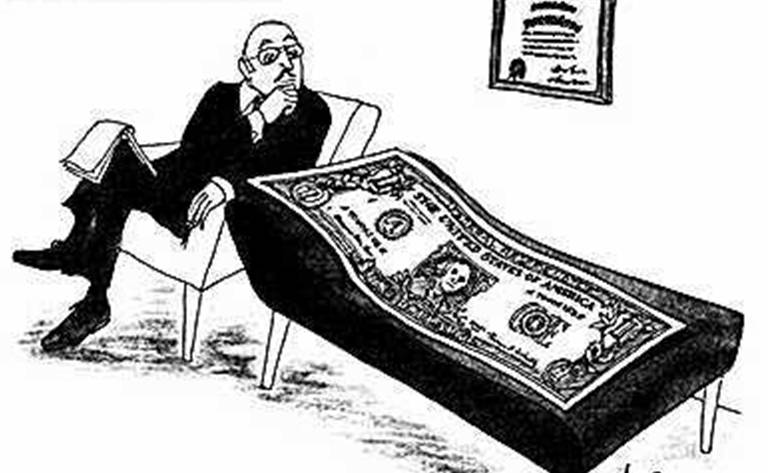
When I think of "the fine arts" I think of plays, symphonies, and artwork held in museums. As far as I can tell, these are the arts that are less focused on in our modern age. We have recognition for them, of course, and teach about them in schools- Shakespeare, Beethoven, Picasso- these are all names we are familiar with, but it seems to me that they fall into this category of "fine arts" that can possibly never be lived up to by anyone from our time (the only possible exception I can personally think of is Phillip Glass). Plays have been replaced by movies, symphonies by Britney Spears, and apparently anyone with a shoelace and some glue can be an artist. Movie stars are some of the most affluent people in existence while even the most talented and renowned Broadway actors earn a fraction of a movie star's pay for their work...but I don't consider movies "fine arts." Same goes for the hit list musicians. I guess when it comes to affluence and the fine arts, what strikes me is that these artforms are nearing extinction. They are no longer creating or perpetuating affluence as they once did, and they seem now to be something that needs saving rather than a tool in advancing society. Affluence in the arts now exists with the movie stars and hit list musicians, which is an inevitable product of our post-industrial society, but it lacks much of the substance of the older, finer arts.
As far as actual artwork goes, my rule is pretty much that it's art if I couldn't have done it myself. I play music- there are many songs that I can reproduce, but I am absolutely not a painting/drawing/sculpting artist. Throwing pieces of sheet metal on top of each other is not art...because I could've done that.
On a completely different note, here is a shadow puppet theater from across the globe. Although materially primitive, I consider this to be fine art from people who are rich in values more than money. (I don't know if this will work, though, so if it doesn't here's the link: http://www.youtube.com/watch?v=YVN-Df2Hatc )
Saturday, February 14, 2009


Thursday, February 12, 2009
Relationship of Art and Affluence
In the course of history, I think art had a big part in showing affluence. In the Renaissance era, if a person owned art they were wealthy and affluent. Popes, Kings, and Queens began to commission artist's to do work for them both personally and for public establishments. They did this because it was not only beautiful, but it was a symbol of affluence. And without the affluence of these individuals, works like the Sistine Chapel, the pyramids, and the Taj Mahal would probably never have been completed. Most artists were poor and would have had little means to complete the afforementioned.
Throughout the years though, as Denea noted, art has become something for the common man. It is no longer as expensive as it once was, which in my opinion means it is not as associated with affluence as it once was. That is, the possession and creation of great art is not as associated with affluence as it once was. However I do think affluence influences whether or not art is considered fine art. Put simply, I believe that if affluent individuals say that something is fine art and worth consideration, people are much more inclined to pay attention to and buy such art. Afterall, I'm no art expert, so if someone tells me that "Black Square" by Kazimir Malevich is fine art, I suppose I'm inclined to believe it. (And as a side note...it had to have been a significantly affluent individual who deemed "Black Square" fine art, because I just don't see it.)
Affluence has and will continue to influence art, but as years go by it will likely influence it in different ways then we have experienced thus far.
Take a look at Kazimir Malevich's "Black Square":
http://imagecache2.allposters.com/images/pic/AWI/AW2070~Black-Square-Posters.jpg
Affluence and Fine Art
Although many works were influenced by the affluent, many are not. If we look to the roots of fine art, we find cave dwellings and songs created by nature. It is thought that the first song was created by someone simply tapping a stick on a log or tree. These works could easily be created by the non-affluent. Same goes for today. If we want to create a song and sing it we can. For the most part, creating art is cheap in today's world, although affluence still helps. The affluent that effect today's art include producers, record labels, theatre owners, ect. Although creating art may be cheap, putting it into action and spreading your ideas are not. The affluent help will this. Someone could afford to write a play, but affording the set design, costumes, actors, ect. is another story. I feel that art is something that anyone can create, rich or poor. Haven't you heard of artists being referred to as, "The starving artist"?


Wednesday, February 11, 2009
Ethnographic Studies at K-State with Michael Wesch
Check out this professor's site. At the site, make sure you are in the "Video Showcase" part of the site, and then scroll to "A Vision of Students Today." If you type that into YouTube, I think the video will pop up.
So... view this, review any of Dr. Wesch's other videos if you're so inclined, and think consider the state of higher education and how it might adapt to students in 2009. With this in mind, how does affluence affect education? Are you sure none of you wants to pick up the Education topic of Affluence? ...
The YouTube link is http://www.youtube.com/watch?v=dGCJ46vyR9o.
Continue to post your thoughts about the paradox of affluence in light of fine arts, but also consider this through the lens of education over the next few weeks.
Thanks.
Caron
Tuesday, February 10, 2009
The Fine Art Paradox
When looking at the subject of fine arts, I would definitely say that the definition very subjective. Sure, we can say that fine art is anything such as sculpture, painting, music, architecture, etc. that is created for beauty rather than utility, but who says what is beautiful? By this definition I could pile some of my garbage in the corner of my apartment, and claim I put it there, because I thought it looked pretty. Well, according to the definition, my pile of trash is fine art. Determining the worth of fine art is not very simple. Whereas money is easily counted, art is truly based on opinion. Is a painting of a can of soup considered a beautiful masterpiece? Apparently it is to some, judging by the popularity of this Andy Warhol painting. Maybe I can paint a picture of laundry detergent and become the next great artist. Surely someone will think my work is fine art. :D
Now that I have done nothing to help determine what is considered fine art and what is not, let's move onto the issue of art and affluence. I think it is very easy to see just how intertwined the two are. Take for example the Baroque architecture of the 17th century. Baroque architecture were typically very elaborate or ornate. This showed a lot of affluence. This very famous style of architecture was constructed mainly in places that reflected affluence such as the Palace of Trier in Germany and Ludwigsburg Palace which is also in Germany.
Finally, it is time to discuss the paradox of affluence as it relates to fine arts. I do think there is definitely a paradox. The way I see the paradox existing is in the fact that a piece of art that is nothing more than scrap metal from a junk yard and a painting that costs thousands of dollars to produce are considered equal. You would expect that the painting would be seen as being of higher value, but the sculpture of scrap metal is just as valuable to some people. Once again a "statement that is seemingly contradictory or opposed to common sense and is perhaps true." PARADOXES ARE EVERYWHERE!...even in the arts. :D
One final thought....
I found this video on Youtube. Musical roads...fine art?
Sunday, February 8, 2009
Week of 2/8 -- Fine Arts
So... the paradox of affluence. Just what is this? Here are some discussion questions regarding the area of Fine Arts within this paradox:
These are from the "Fine Arts" section of the Discussion Questions from the PTK site. These help generate some ideas and thoughts. What are your considerations of the Fine Arts? Do you consider yourself a patron of the arts? Why or why not? How do you define the fine arts, and in doing so, how do you see a paradox of affluence as associated with this particular industry? Does one exist? Brainstorm / play around with these ideas -- post photo collages or videos of your experiences with the fine arts: what plays have you seen? In what locations? Have you attended the ballet? The opera? What are your perceptions of those arts?
See you Monday... be thinking about these. Let's simply discuss some of these ideas this week.
Enjoy your Sunday evening. So do the Grammy's fall under the Fine Arts???? ;) I'm getting some great exposure to the musical arts at the moment...
Caron
- What has been the relationship between affluence and the development of great art? How has the development of the terra cotta warriors, the pyramids, the sculpture of David, the Sistine Chapel, the Taj Mahal, "The Four Seasons", and the works of Shakespeare been influenced by wealthy or powerful patrons?
- How does affluence affect the standards and evaluation of the fine arts? How does the democratization of art ownership influence the standards and evaluation of the fine arts?
- How was the science of human gross anatomy influenced by the artists of the Renaissance? In what ways did this contribute to the development of modern medicine?
- Who are the great arts patrons of the 21st century? How did they earn their money? To what extent are museums and theatres obsolete in contemporary society?
- To what extent is it desirable to have sports stadiums and arts facilities named for businesses? What are the benefits of having businesses set aside a percentage of their budgets to purchase fine art for their headquarters?
These are from the "Fine Arts" section of the Discussion Questions from the PTK site. These help generate some ideas and thoughts. What are your considerations of the Fine Arts? Do you consider yourself a patron of the arts? Why or why not? How do you define the fine arts, and in doing so, how do you see a paradox of affluence as associated with this particular industry? Does one exist? Brainstorm / play around with these ideas -- post photo collages or videos of your experiences with the fine arts: what plays have you seen? In what locations? Have you attended the ballet? The opera? What are your perceptions of those arts?
See you Monday... be thinking about these. Let's simply discuss some of these ideas this week.
Enjoy your Sunday evening. So do the Grammy's fall under the Fine Arts???? ;) I'm getting some great exposure to the musical arts at the moment...
Caron
Friday, February 6, 2009
Inside - Out
I felt that the story about the way that him and his wife viewed their son was very interesting. Here are a few points that I liked:


We feel that everyone should be the same in our cookie-cutter world.

Parents tend to expect and demand too much from their children that they end up being overprotective and controlling.

You can hit a "home-run" when you sit back and let others find their own identity.

It's all in the way that you perceive the situation.
Half empty or half full?

Thursday, February 5, 2009



Wednesday, February 4, 2009


Tuesday, February 3, 2009


Sunday, February 1, 2009
Sunday Night Blog -- I'm not happy!!!! GRRRR!!!!
OK... this is the third attempt for the blog, so I'm going to be quick. Mental note: do NOT attempt to post to blogs during the Super Bowl. Especially when the Vegas bookies are losing...
SO... here's what I'd like us to do on the blog this week. Post anything related to the 7 Habits. The other blog writings were much more elo quent and detailed, but here's what I'm thinking. In this section I'm reading and presenting to you tomorrow, I have found the paradigm shift metaphors and concepts to be intriguing. The entire first summer of the doctoral program was about understanding the power of paradigm shifts. So... I am going to post some graphics -- well, a graphic because of this silly football game -- that shows the power of the paradigm shift from the individual to a culture to an entire civilization [think major changes to cultures... agricultural -- industrial -- technological...]. What I'd like you to do is consider something you found particularly intriguing in this Part I, and do a photo collage about it.
 quent and detailed, but here's what I'm thinking. In this section I'm reading and presenting to you tomorrow, I have found the paradigm shift metaphors and concepts to be intriguing. The entire first summer of the doctoral program was about understanding the power of paradigm shifts. So... I am going to post some graphics -- well, a graphic because of this silly football game -- that shows the power of the paradigm shift from the individual to a culture to an entire civilization [think major changes to cultures... agricultural -- industrial -- technological...]. What I'd like you to do is consider something you found particularly intriguing in this Part I, and do a photo collage about it.
For your posts this week, post 3-4 graphics that correspond to any concepts or principles within Part I of 7 Habits. Then, respond to at least one of your peers.
And I will get grades up for both Blogs 1 & 2 over the next couple of days.
Friday, January 30, 2009
Personality Test Results
I took the personality test from www.personalitypathways.com and based on their results I have the Dominant Intuitive Types of being an INFJ. Yes...I'm an introvert...well, mostly. I think this test was fairly accurate because I have several of the characteristics listed. Being an INFJ means that I draw my primary energy from my inner world of thoughts and feelings. It also shows that I tend to think abstractly and grasp concepts. By trusting my intuition I focus on the "big picture" and have an imaginative mind. I also base a lot of my decisions on my feelings (which is true).
I also took the Jung Typology Test on www.humanmetrics.com and got the results of being an ENFJ... However, I took both tests on different days so I'm sure that is why the results varied. That being said, I am very interested in seeing my results from the MBTI that way I can compare notes.
I do not necessarily think that I fit exactly into one category or the other, but I do believe that I have similar traits of each of them. It's fascinating to look at the different types of personalities because I often wonder why people do certain things they do. Or why we all have different preferences and go about doing things differently. I also hope that seeing these results would allow me to learn some new things about myself as well. :)
Thursday, January 29, 2009
My Results
I took that test that Denea posted from humanmetrics.com and I was shocked at the accuracy! The job fields provided weren’t exactly what I’ve been looking at, but the personality indicator was spot on!? The test indicated that I was an ENTP (Extraverted iNtuitive Thinking Perceiving). I was very skeptical at first but there are a few things mentioned that I could not deny: "generally love to argue--both for its own sake, and to show off their often-impressive skills. They tend to have a perverse sense of humor as well, and enjoy playing devil's advocate." (that’s me), "They sometimes confuse, even inadvertently hurt, those who don't understand or accept the concept of argument as a sport." (unfortunately yes), "have little patience with those they consider wrongheaded or unintelligent, and show little restraint in demonstrating this." ( a sin I’ve been known to commit). Some of these are unfortunate truths but they are truths nonetheless. I post this only to show that, even if a test is partially accurate, actually reading truths about yourself may have a greater effect than previously thought, it did to me :)
Wednesday, January 28, 2009
Things that make you go Hmmmm.....
OK, so I am usually skeptical about anything psychology, so I was not sure what to think about the MBTI. I did quite a bit of searching but found no more than what was posted to be relevant. I did find a lot of criticism and debates on the validity of the subject of personality type tests, but I think that I want to experience one before I make my decision as to how valid or reliable they are. I do feel that there has to be way more than 16 different personality types out there. I took the personality test on the human metrics site and was not impressed with it, so I have hopes the MBTI is significantly more accurate. It did not seem to put me in the right box. I find it a little depressing to think that everyone could be put in a little box and be completely defined. There is hopefully a great deal more to every one's personality than this. I guess it can work if it is only for a job.
On a more optimistic note, I am actually kind of excited to get our results back. Typically I only believe what can be rationally explained and you don't get a whole lot of that in psychology. At this point in my life I am open for ideas no matter what form they may be in. Maybe that has something to do with the fact that I am still so up in the air about my major, but I am hoping that this can give me a better idea of what field will be suitable for me. (However, I would take suggestions from strangers at this point.) :)
So I am going to stay open minded and see what the results bring. I actually hope that my mind is changed as to how reliable these types of tests are.
Tuesday, January 27, 2009
Psych 110 rears its ugly head again...
Ah, personality indicators. Having studied this subject on a very basic, superficial level last semester, the information I would have to offer based on such might seem to be simply that- basic...and superficial. However, having been my mother's guinea pig for all-that-is-personality-tests during her years in graduate school, I feel that I had a much too comprehensive understanding of the silly things long before my first psych class. That being said, here are my thoughts/issues/rants:
As we know, the MBTI is based on the work of Carl Jung and is designed to indicate preferences. Christinah already posted the details concerning the categories of preferences below, so I will not bother going into that again, but I noticed something else on the same website- http://www.myersbriggs.org/my-mbti-personality-type/mbti-basics/ which I felt was equally important to touch on...and argue with. The site, and the Myers and Briggs foundation, claim
"The best reason to choose the MBTI instrument to discover your personality type is that hundreds of studies over the past 40 years have proven the instrument to be both valid and reliable. In other words, it measures what it says it does (validity) and produces the same results when given more than once (reliability). "
Well, validity and reliability are certainly the key components in any study, experiment, or test/indicator. Psychology books are riddled with the two terms. Yet, I can't help but challenge both in this particular test. In my case, for instance, I find it incredibly hard to pick between the limited options given for each question. When posed a question of preference relating to sympathy or reason, the question rewords itself in my head because I do not know how to choose one or the other. I feel that to choose is limiting, as I am not willing to give precedence to either option and therefore claim lesser importance to the other; am I unbalanced but sympathetic or a level-headed jerk?? I find myself subconsciously trying to fake the test or something, basing my answers on what I think would make the test promote my ability to be a talent agent or a behavioral geneticist... "Please don't be a garbage man, please don't be a garbage man."
Let me backtrack for a second. I do realize, of course, that (in theory) the test is based on initial reactions, and that making one choice does not actually mean that a person doesn't possess the ability to demonstrate the other, but it's just like yelling out a convict's prior crimes in court and having them immediately stricken from the record- that information is still there, you can't pull it back out of someone's mind once they've heard it. What I'm trying to say is that even if I do try to answer such tests based on my real initial reaction, at some point towards the middle of the test I'm going to see the consistency of, say, the thinking vs. feeling questions and begin to answer questions in the opposite manner to balance things out (y'know, so I don't appear to be a "level-headed jerk" or "unbalanced but sympathetic"). WHAT DOES IT ALL MEAN?? Apparently that I'm much too concerned with being a nice blend of all things, and can't take a personality inventory (or at least not honestly). Hmm, maybe I'm actually the worst of both worlds- an unreliable jerk?
Perhaps no one else has this issue. To those I say, congratulations on being a real person! Thinking in this manner is quite exhausting!
Before I go, I would like to say something about the MMPI, or the Minnesota Multiphasic Personality Indicator. This one is my personal fave simply because it weeds out frauds like me. The test has many similar components to the MBTI, but adds three validity scales which are designed to determine whether or not the subject is attempting to fake some sort of appearance. The test was even revised (as the MMPI-2) to cover even more extensive validity scales, including the one that would absolutely rule me as a fraud! Following is the description of one of the three new scales (the TRIN) as it appears on a website about the MMPI, http://www.falseallegations.com/mmpi-bw.htm:
"The TRIN refers to the true response inconsistencies scale and indicates invalid profiles due to a true set or a false set. A true set is when a person answers true to two inconsistent items such as most of the time I feel blue and I am happy most of the time. A false set would be answering false to both items. The validity scales are extremely important in the interpretation of the entire test since it indicates the degree to which a clinical profile is a valid picture of the person being evaluated."
These validity scales are not included in the MBTI, but such witchcraft probably isn't necessary if the test isn't being given to unreliable jerks. ;)
Carl Jung and the MBTI
When reading about the MBTI, I actually became more interested in the theories on which it was based rather than the actual results of the test. Since I am planning (at least for the moment) on entering the psychology field, I decided to do a little research on Carl Jung, the psychiatrist whose theories inspired the MBTI.
I found this on http://webspace.ship.edu/cgboer/jung.html
"Jung developed a personality typology that has become so popular that some people don't realize he did anything else! It begins with the distinction between introversion and extroversion. Introverts are people who prefer their internal world of thoughts, feelings, fantasies, dreams, and so on, while extroverts prefer the external world of things and people and activities.
The words have become confused with ideas like shyness and sociability, partially because introverts tend to be shy and extroverts tend to be sociable. But Jung intended for them to refer more to whether your ("ego") more often faced toward the persona and outer reality, or toward the collective unconscious and its archetypes. In that sense, the introvert is somewhat more mature than the extrovert. Our culture, of course, values the extrovert much more. And Jung warned that we all tend to value our own type most!
Whether we are introverts or extroverts, we need to deal with the world, inner and outer. And each of us has our preferred ways of dealing with it, ways we are comfortable with and good at. Jung suggests there are four basic ways, or functions:
The first is sensing. Sensing means what it says: getting information by means of the senses. A sensing person is good at looking and listening and generally getting to know the world. Jung called this one of the irrational functions, meaning that it involved perception rather than judging of information.
The second is thinking. Thinking means evaluating information or ideas rationally, logically. Jung called this a rational function, meaning that it involves decision making or judging, rather than simple intake of information.
The third is intuiting. Intuiting is a kind of perception that works outside of the usual conscious processes. It is irrational or perceptual, like sensing, but comes from the complex integration of large amounts of information, rather than simple seeing or hearing. Jung said it was like seeing around corners.
The fourth is feeling. Feeling, like thinking, is a matter of evaluating information, this time by weighing one's overall, emotional response. Jung calls it rational, obviously not in the usual sense of the word."
After reading that information, I can see just how closely tied the MBTI is to Carl Jung's theories and beliefs.
If there is one thing I have learned from my abnormal psychology class this semester, it's that we aren't that far removed from the days where the mentally ill were considered witches and bleeding a patient was the standard treatment for any mental disorder from schizophrenia to depression. I understand that most of the people who are taking the MBTI are not mentally ill, but it is because of the research done in order to cure mentally ill patients that we have the information regarding our unconscious mind and personality. But since we aren't that far removed, I believe that we still have a long way to go when it comes to figuring out the mind. For now the MBTI is one of the best indicators as to personality type, but who knows what will be discovered within our lifetime?
When looking at why companies use the MBTI, perhaps it is best summarized by the man whose theory on which it is based. Carl Jung once noted, "The meeting of two personalities is like the contact of two chemical substances: if there is any reaction, both are transformed." Companies are looking to see how the different personalities each individual has will interact, and how they will complement each other. Will it lead to an explosion of disasterous proportions or rather will one's strengths fill in the gap where another is lacking? Businesses that use the MBTI are looking for ways make the business run as efficiently as possible. By taking the personality test, most likely the company will be able to see where certain people might clash and others may work well together.
As an ending thought, I find it very interesting that the idea of the personality test in a way contradicts the philosophy of Carl Jung. He once stated that no one is merely extroverted or introverted, they are always a combination. By taking a personality test, we are being put into one box or another. As for myself, I believe I am equally as extroverted as I am introverted. I am very excited to see what the results say, though. I do think the results of the test can change over time as we grow and develop our minds so my advice is to take the results with a grain of salt.
Now that I have done my critical thinking for the day, I am off to bake some bread! :D
Myers-Briggs Type Indicator... The Personality Horoscope?
I did manage to find a short and sweet video that covered much about the basics of the Myers-Briggs Type Indicator. Many of the other videos about the MBTI were very boring and seemed to lack any clear information whatsoever.
I also found an online test, one of the few that are free, at http://www.humanmetrics.com/cgi-win/JTypes2.asp. However, the results that I received from this test seemed very inaccurate and unworthy of posting, but hopefully someone else may find great use of it. :)
While searching for information on the MBTI, I could not help but notice that many people hold great criticism for the test. It is believed there could be just about every possible problem with the test, ranging from its reliability to its practical application for career planning. Personally, I could not agree more, I feel as though the test may as well have asked if I like donuts or bagels and then give me an IQ evaluation. At best I think the MBTI would only tell me something I already knew, that is if it were reliable enough and concrete enough to do so. I find the possible results of the test to be so vague that they could possibly apply to anyone depending on any numerous circumstances. Although I do understand that the test is about preference, I cannot help but feel that it is overall flawed. I can only hope that the results tomorrow morning will change my mind, but I do have my doubts.
Subscribe to:
Posts (Atom)